
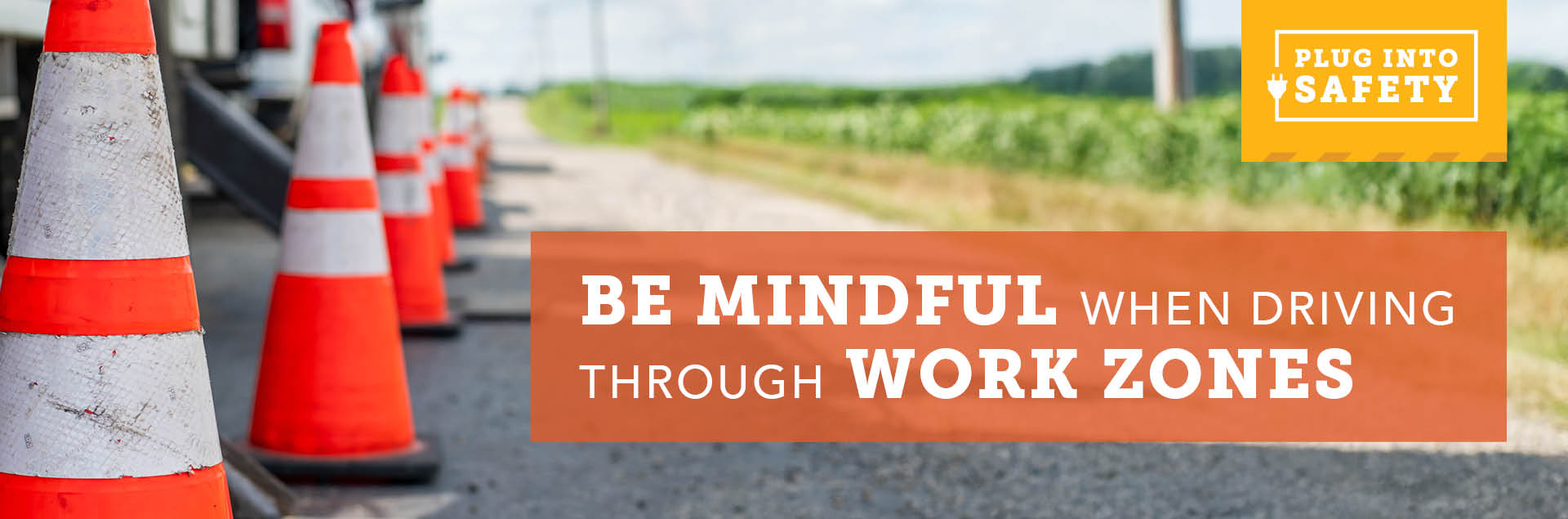
Work zones remain some of the most dangerous areas on the road. According to the Indiana Department of Transportation, 269 people have died in work zone crashes in the past 10 years. In 2023 alone, 33 people were killed and more than 1,750 were injured in INDOT work zones.
Work zones are not limited to highway construction. They also include utility crews who work along the roadside to build, maintain and repair electric infrastructure. Crews may be working around the next bend, over a hill or during overnight hours.
“Our crews already face dangerous conditions in their work,” said John Cassady, CEO of Indiana Electric Cooperatives. “We ask drivers to slow down, stay alert and give them space to return home safely.”
Motorists should:
- Watch for orange work zone signs, flaggers, and vehicles with flashing lights
- Slow down and be prepared for sudden stops
- Never stop in the roadway. This can trigger rear-end collisions.
Indiana’s “move over” law requires drivers to change lanes when approaching emergency vehicles stopped along the roadway if it is safe to do so. If not, drivers must reduce speed at least 10 mph below the posted limit and proceed with caution. While the law specifically applies to emergency vehicles, motorists should extend the same courtesy to all roadside workers.
Violations carry steep penalties including fines, suspended licenses or jail time if workers are injured or killed.
Rear-end crashes are the most common type of work zone accident. Nationally, four out of five people killed in work zone crashes are drivers and passengers. The time saved by speeding is minimal — traveling two miles at 65 mph instead of 45 mph only saves one minute.
Slowing down protects both roadside workers and drivers.