
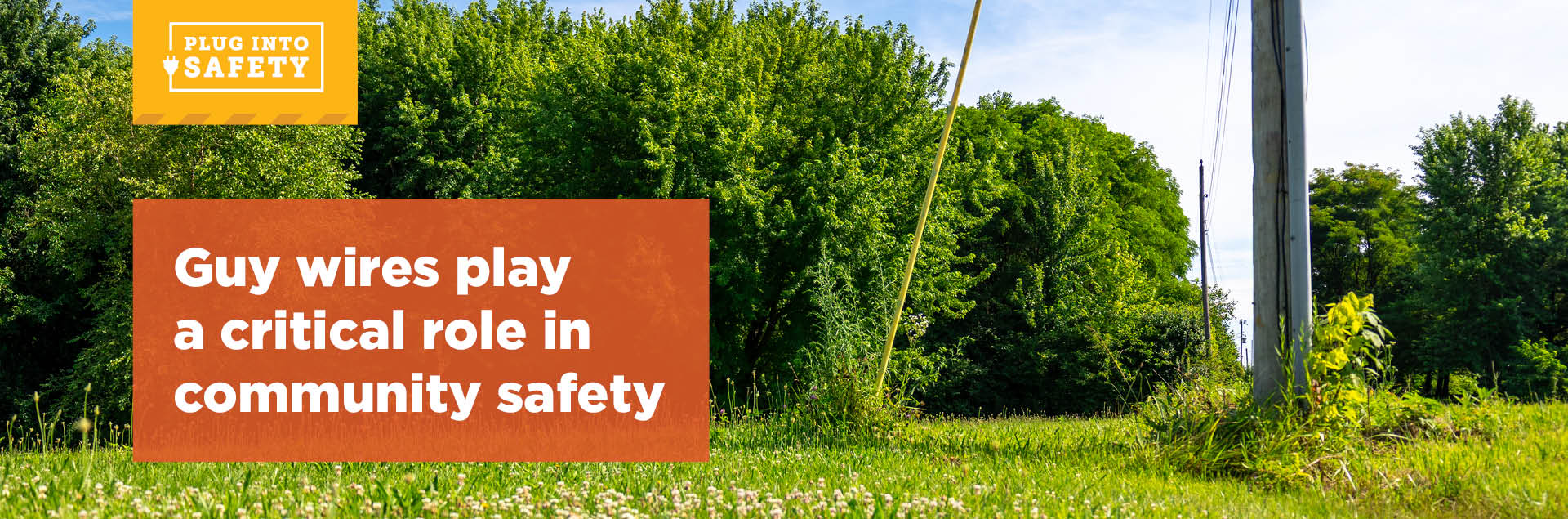
While they may not look dangerous, guy wires play an important role in maintaining the safety and reliability of the electric system. Indiana’s electric cooperatives reminds members to be aware of these important support structures and follow a few simple precautions to help prevent accidents.
Guy wires can be found throughout the community. They are tensioned cables attached to utility poles, radio towers, tents, and other tall structures to help keep them stable. They are typically anchored in the ground and attached to utility poles to help support the structure against the constant pull of power lines. They are under high tension, so they shouldn’t be tampered with.
If a guy wire is loose, bent, or cut, it can compromise the stability of the entire pole. In some cases, that could lead to leaning poles, sagging lines, power outages, or injuries.
Yellow or plastic covers are often found near the bottom of some guy wires. These are called guy guards and help make the wires easier to see so people don’t accidentally walk or drive into them.
Indiana’s electric cooperatives encourage members to follow these safety tips around guy wires:
- Don’t attach anything to a guy wire: Signs, decorations, pet leashes, and sports equipment can strain the wire or the anchor over time.
- Be careful when mowing, trimming, or digging nearby: Hitting a guy wire with lawn equipment can damage it and create a safety hazard. If you are planning a project such as planting a tree or installing a fence, give the guy wires plenty of space. Call 811 if you plan on digging on your property.
- Remind children not to play on or around guy wires: They may look like fun to climb, but they aren’t designed for play.
- Speak up if something looks wrong: If you notice a guy wire that’s loose, damaged, or disconnected from the ground, contact your local electric cooperative to have it checked by a professional.
While they may not look dangerous, guy wires play an important role in supporting infrastructure that powers homes, businesses, and communities. Staying aware of a few basics can help prevent accidents.