

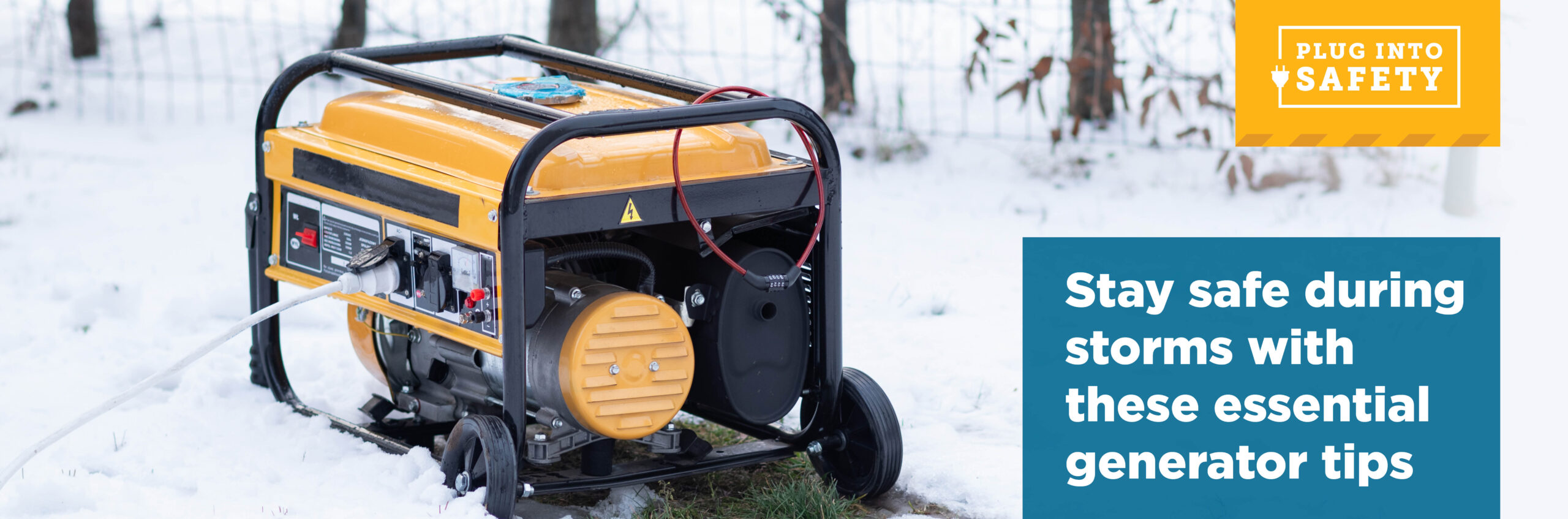
While backup generators can be helpful during a power outage, Indiana Electric Cooperatives reminds consumers that portable generators can pose risks.
RISK 1: Carbon monoxide poisoning
Small generators use a combustion engine that usually burns gasoline or other liquid fuels. Like any gas-powered machine, these small engines produce carbon monoxide. To prevent carbon monoxide (CO) poisoning, consumers should keep generators outdoors and away from doors, windows, and vents. Point the exhaust away from your home and locate the generator downwind from your home.
RISK 2: Electrocution or electric shock
To keep utility workers, neighbors, and those in your household from electrocution dangers, never plug your generator directly into your home’s wiring. “Backfeeding” sends power from the generator throughout your house in reverse and can even feed onto your electric utility’s power lines. Workers attempting to restore power might unexpectedly encounter this high voltage, which could cause fatal shock. To prevent a “backfeed,” have a professional install a transfer switch. To avoid the risk of electrocution, do not use a generator in rainy or wet conditions. It’s also important not to handle the generator with wet hands to avoid electric shock.
RISK 3: Burns and fire
When using a generator, store extra fuel in an American National Standards Institute-approved container in a cool, well-ventilated place away from fuel-burning appliances. Always turn off the generator and let it cool before refueling. Gasoline spilled on hot engine parts could ignite.
Keeping these three risks in mind when installing or using your home’s generator will help ensure your safety and that of others.
While they may not look dangerous, guy wires play an important role in supporting infrastructure that powers homes, businesses, and communities. Staying aware of a few basics can help prevent accidents.
Generator dos and don’ts
- DO operate a generator outdoors in a well-ventilated area.
- DO install carbon monoxide alarms inside the home to provide an early warning.
- DO NOT plug a generator into the wall without installing a transfer switch to prevent backfeed.
- DO turn the generator on before plugging in appliances.
- DO NOT touch the generator with wet hands to avoid electrocution.
- DO turn off the generator before refueling with gasoline to allow it to cool down.
- DO NOT overload the generator.
- DO use a heavy-duty, outdoor-rated extension cord rated at least equal to the sum of the connected appliances.
- DO NOT use a generator as a permanent solution.
- DO consult the owner’s manual for your generator for specific safety instructions.